
If you enjoyed this page or found value in it, I'd appreciate it if you gave it a little love on social media!
Disclaimer: Please note that some of the links in this post may be affiliate links or ads. There is no additional cost to you, but The Scrap Room will earn a small commission should you choose to purchase through those links. Click here for my full disclaimer. Thank you for your support.

Beading Basics for Jewelry Making
Everything you need to know to get started in beading
Have you ever admired a beautiful handmade bracelet, necklace, or pair of beaded earrings and thought about making something similar yourself? Beading is a wonderfully creative hobby that allows you to turn a handful of pretty beads into something completely unique. Whether you're interested in making your own jewelry, creating handmade gifts, or adding decorative beads to other craft projects, learning a few simple beading basics is the perfect place to start!
One of the best things about beading is that you don't need a lot of expensive equipment or previous crafting experience to get started. With a few basic jewelry making supplies, some colorful beads, and a little patience, you can begin creating beautiful handmade pieces right at your craft table.
Of course, walking into a craft store and seeing hundreds of different beads, wires, threads, needles, and jewelry making tools can feel a little overwhelming when you're just beginning. What's the difference between seed beads and Delica beads? Do you need special needles? Should you use wire or thread? And which beading tools are actually worth buying?
That's exactly what this beginner's guide is here to help you figure out!
Below, we'll explore some of the most common types of beads used in jewelry making, explain the differences between popular stringing materials, and introduce the essential beading tools and supplies that make your projects easier. You'll learn what these materials are used for, why they're useful, and how to choose the right supplies for the kinds of beaded crafts you want to create.
Whether you're planning your very first beaded bracelet or simply want to become more familiar with jewelry making supplies, these beading basics will help you get started with a little more knowledge, confidence, and creative inspiration!
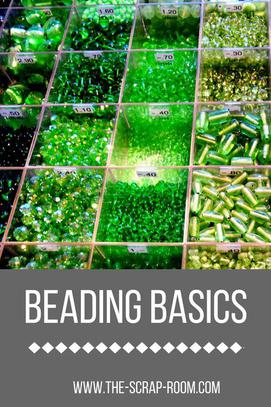
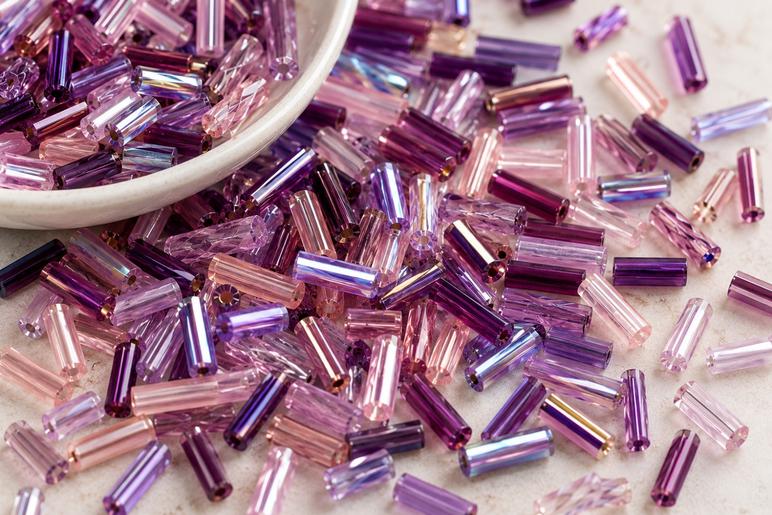
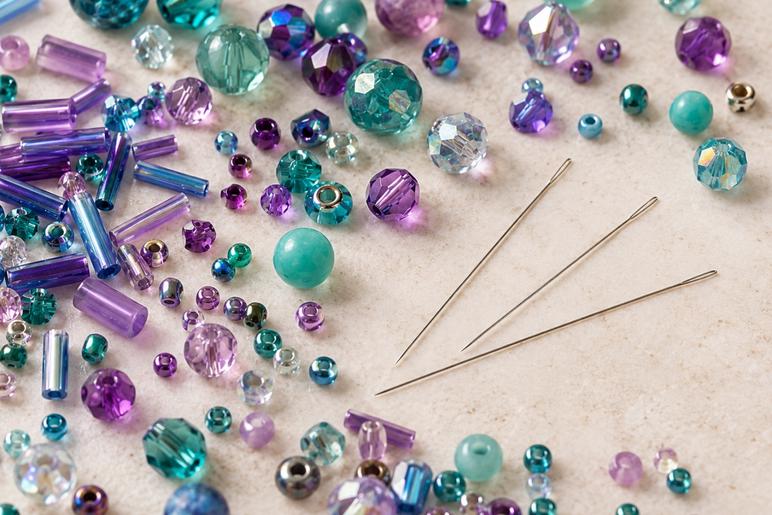
Bugle Beads: Bugle beads are long, narrow, tubular beads that are generally considered a type of seed bead. They're available in several different lengths and can add beautiful lines, texture, and geometric details to beaded jewelry. Bugle beads are especially popular for decorative patterns, fringe, and bead embroidery. Because their cut edges can sometimes be sharp, it's important to choose a suitable thread and avoid excessive rubbing against the ends of the beads.




Beads
Beads are the heart of almost every beading project, and choosing them is one of the most enjoyable parts of making your own jewelry! They come in an incredible variety of colors, shapes, sizes, materials, and finishes, making it easy to create everything from delicate, elegant jewelry to colorful, playful accessories.
When you're first learning how to bead, it's helpful to understand the differences between some of the most popular types of beads. Certain beads are especially well suited for intricate bead weaving, while others are perfect for simple stringing projects like bracelets and necklaces.
Here are a few common types of beads you'll encounter when shopping for jewelry making supplies:
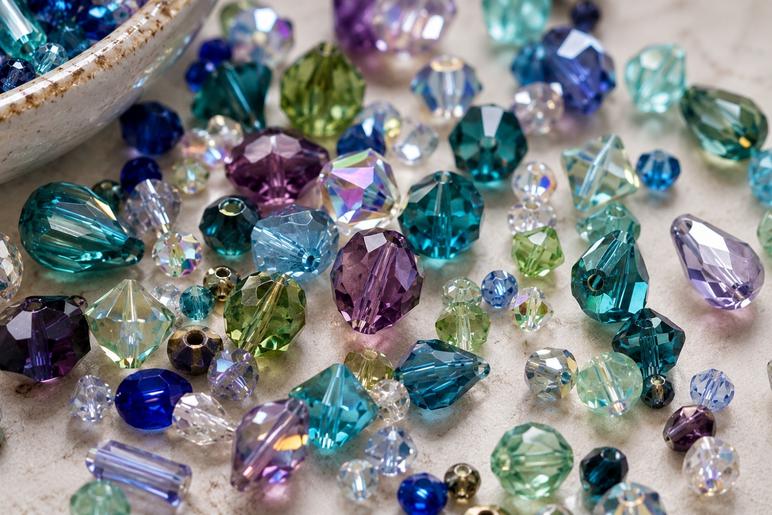
Crystal Beads: Crystal beads are popular for adding sparkle and elegance to handmade jewelry. Many are faceted, meaning they have multiple flat surfaces that catch and reflect light, much like a cut gemstone. Crystal beads come in a variety of shapes, sizes, and colors and are often used as accent beads in necklaces, bracelets, and earrings. Premium crystal beads can be more expensive than ordinary glass or seed beads, but even a few strategically placed crystals can make a simple jewelry design look extra special.
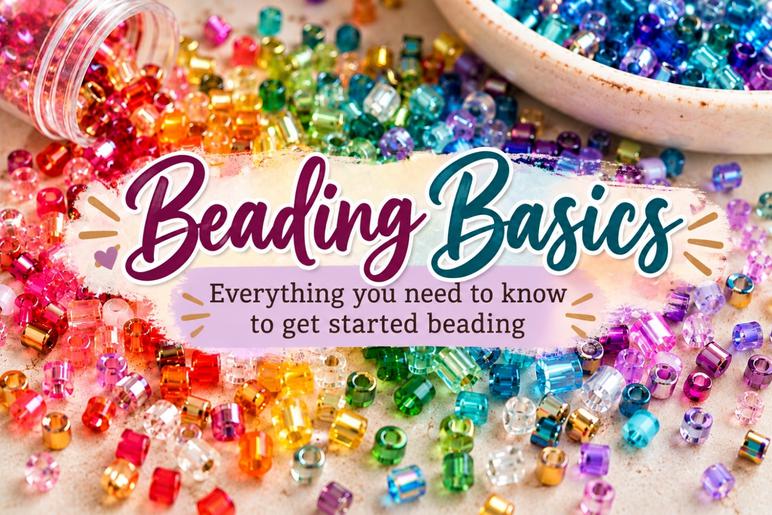
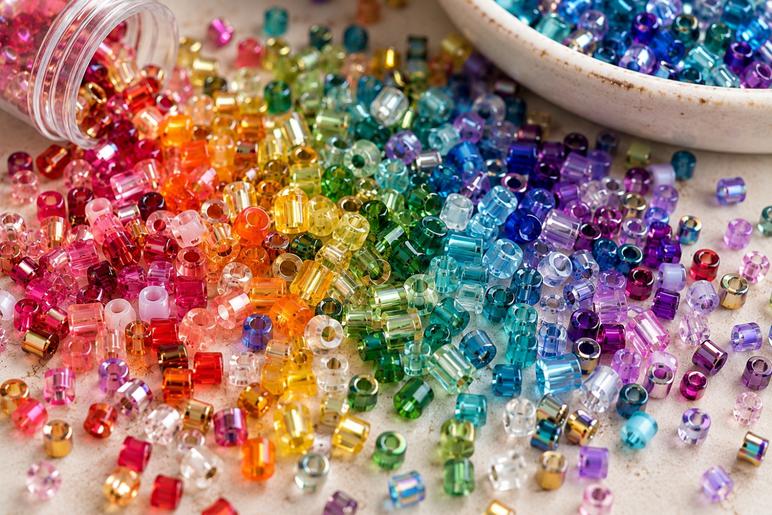
Delica Beads: Delica beads are small, precisely shaped cylindrical glass beads that are especially popular for bead weaving. Unlike traditional rounded seed beads, Delicas have a uniform shape and relatively large holes, allowing them to fit neatly together in detailed patterns. Their consistent size makes them an excellent choice for projects that require even rows, crisp edges, or intricate designs. They're particularly useful for techniques such as peyote stitch and brick stitch.
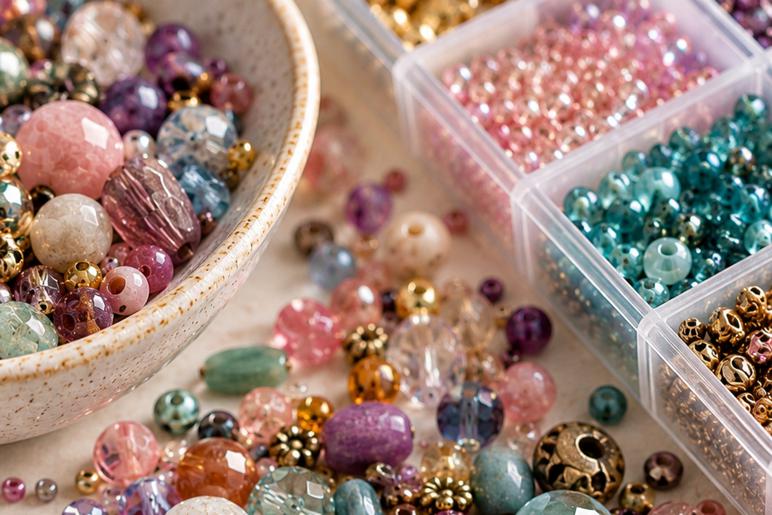
Gemstone Beads: Gemstone beads are made from natural or manufactured stone materials and are a beautiful option for jewelry with an earthy, elegant, or organic appearance. Popular examples include amethyst, rose quartz, turquoise, agate, and jade. They can be polished into smooth round beads, cut into faceted shapes, or left with a more natural appearance. Gemstone beads are commonly sold in strands and work beautifully in bracelets, necklaces, and other handmade accessories.
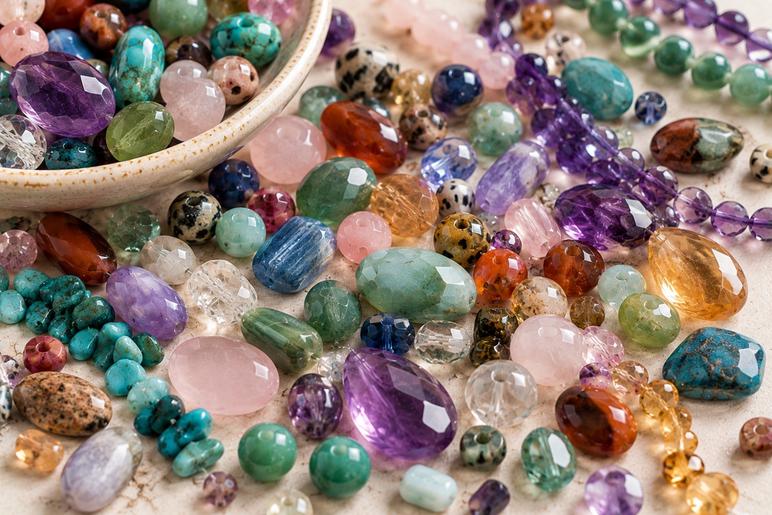
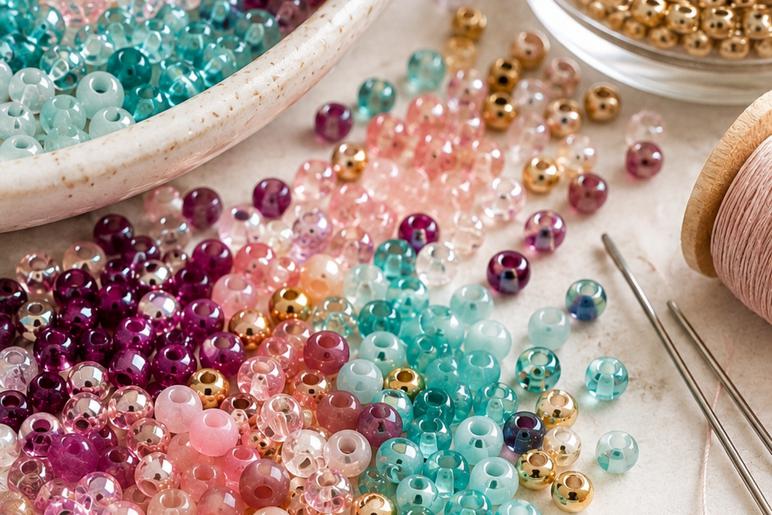
Seed Beads: Seed beads are tiny glass beads available in an enormous assortment of colors and finishes. They're commonly used for bead weaving, embroidery, decorative accents, and intricate jewelry designs. Seed beads are identified by numbered sizes, such as 6/0, 8/0, 11/0, and 15/0. The larger the number, the smaller the bead. For beginners, larger seed beads are often easier to handle, while smaller sizes are ideal for detailed patterns. Brands such as Miyuki and Toho are especially popular because of their consistent shapes and sizes.
As you experiment with different types of beads, you'll discover that mixing sizes, colors, textures, and finishes is a wonderful way to create interesting designs. Don't be afraid to combine simple beads with a few special accent beads to make your projects truly your own!
Needles
Choosing the right beading needle can make a surprisingly big difference in how easy and enjoyable your jewelry making projects are. Although an ordinary sewing needle may work with some larger beads, specialized beading needles are generally thinner and designed to pass through the small holes found in many jewelry making beads.
Beading needles are especially useful for projects involving seed beads, bead weaving, bead embroidery, and other techniques where you need to pass thread through individual beads.
Like sewing needles, beading needles come in different sizes. However, their sizing system can be a little confusing at first! With many traditional beading needles, a higher size number indicates a thinner needle. For example, a size 12 beading needle is generally thinner than a size 10.
The needle you choose should be thin enough to pass comfortably through the holes in your beads while still being sturdy enough for your project. You'll also need to consider the thickness of your beading thread, since both the needle and thread must fit through the bead opening.
If you're planning to try bead weaving, keep in mind that some stitches require you to pass through the same bead several times. In these cases, a thinner needle and finer thread can make the process much easier.
For beginners, it's often helpful to purchase a small assortment of beading needles rather than committing to just one size. This gives you an opportunity to experiment with different beads and techniques as you learn.
And don't forget that not every beading project requires a needle! Simple bracelets and necklaces made with elastic cord or flexible beading wire can often be assembled without one.
Stringing Materials
Once you've chosen your beads, you'll need something to hold them together! Beading stringing materials come in a wide variety of thicknesses, colors, and materials, and choosing the right one depends largely on the type of jewelry or craft project you're making.
Some stringing materials are soft and flexible, making them ideal for intricate bead weaving or delicate jewelry. Others are stronger and more structured, providing support for heavier beads or designs that need to maintain their shape.
Two of the most common categories of stringing materials are cords and wire, although there are several different options within each group.
Beading Thread and Cord: Soft stringing materials are available in silk, nylon, polyester, and other fibers. These materials are useful for many jewelry making techniques, including bead weaving, knotting, and stringing. Specialized beading threads are designed to pass through small bead holes and withstand repeated stitching, making them especially useful for projects with seed beads and intricate patterns.
Elastic Cord: Stretchy elastic cord is a popular choice for beginner jewelry making projects, particularly simple beaded bracelets. Because elastic stretches, you can create bracelets that slip over your hand without requiring a clasp. This makes elastic cord a convenient option for quick, easy projects. Be sure to choose a thickness that fits through your beads and follow the manufacturer's recommendations for securing the ends.
Flexible Beading Wire: Flexible beading wire is commonly made from several thin metal strands coated in a protective nylon layer. It's a popular choice for stringing necklaces and bracelets, particularly when working with heavier beads such as gemstones or glass. Flexible beading wire is typically finished with crimp beads or crimp tubes and a jewelry clasp.
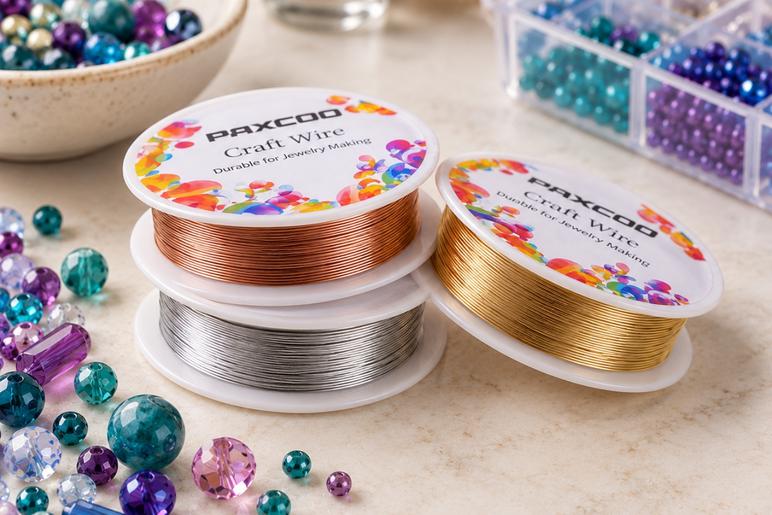
Solid Jewelry Wire: Solid metal wire is another useful material, but it serves a different purpose from flexible beading wire. It's commonly used to create loops, decorative shapes, wire-wrapped beads, and jewelry components. Different wire gauges offer different levels of thickness and flexibility, allowing you to create everything from delicate details to sturdier jewelry structures.
When choosing your stringing material, consider the size and weight of your beads, the flexibility you want in your finished piece, and whether your project will require a clasp.
For your first beading project, a simple stretch bracelet or a necklace made with flexible beading wire can be an excellent way to practice arranging beads, experimenting with color combinations, and learning basic jewelry making techniques.
Tools
You don't need an entire collection of expensive jewelry making equipment to start beading! While there are many specialized tools available for advanced techniques, a few basic beading tools will help you complete a wide variety of beginner projects.
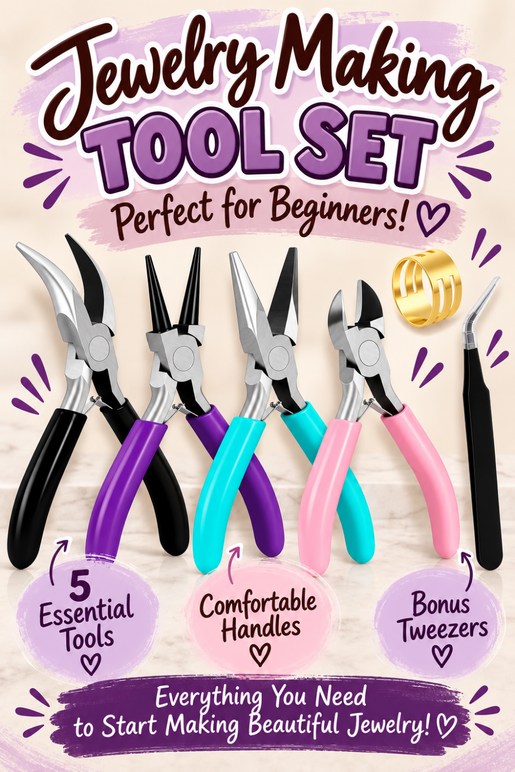
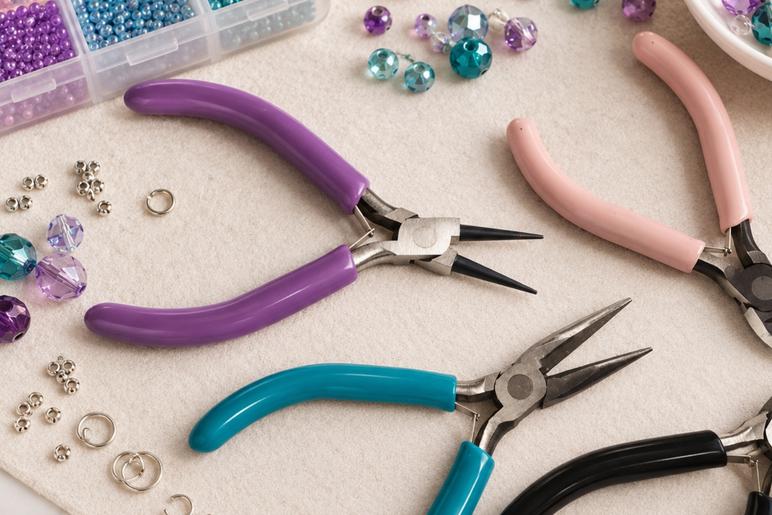
I grabbed this small tool kit, and I've used it for more beading projects than I can count. It comes with the essentials, and is a great budget friendly set of tools to use until you get more serious about beading.
Having the right tools makes it easier to handle small jewelry components, bend wire, secure your beads, and give your finished pieces a neat, professional appearance.
If you're just getting started with DIY beaded jewelry, these are some of the most useful tools to have in your craft supplies:
Crimping Tools: Crimping pliers are especially useful when making necklaces and bracelets with flexible beading wire. They're designed to securely compress small metal crimp beads or tubes, which help hold the wire in place and attach clasps or other jewelry findings. Properly secured crimps prevent your beads from sliding off the ends of your jewelry. Some jewelry makers also use decorative crimp covers to conceal the flattened crimps and give their finished pieces a polished appearance.
Pliers: A good set of jewelry making pliers is one of the most versatile investments you can make. Round-nose pliers are used to create loops and curves in wire, while chain-nose or flat-nose pliers are useful for gripping, bending, and positioning small components. Pliers are especially helpful when working with jump rings, clasps, wire-wrapped beads, and other jewelry findings. You don't necessarily need every type of plier right away, but a couple of basic pairs will go a long way.
Scissors: A small, sharp pair of scissors is essential for cutting soft beading threads, cords, and other fiber-based stringing materials. Look for scissors with fine, pointed tips that allow you to make precise cuts close to your beadwork. Keeping a dedicated pair of scissors for your threads can help prevent fraying and keep your cuts neat and clean.
Wire Cutters: Wire cutters are designed to cut metal wire cleanly without damaging your regular scissors. They're especially useful when working with flexible beading wire, jewelry wire, and wire-based findings. Different cutters are designed for different wire types and thicknesses, so be sure to use a pair appropriate for your materials. Avoid using ordinary craft scissors to cut metal wire, since doing so can quickly dull or damage the blades.
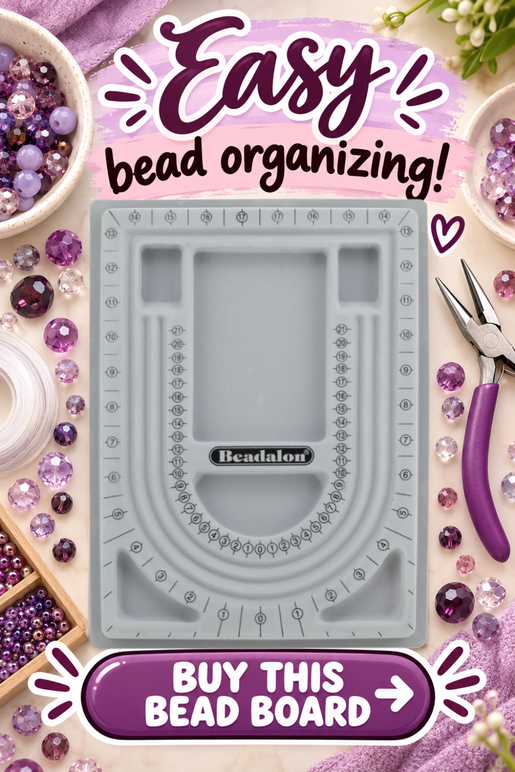
As you become more comfortable with beading, you may discover other helpful accessories, such as bead mats, bead organizers, measuring tools, and bead boards. These can make your workspace more organized and help you plan your designs, but they're not essential for your very first project.
I really love my bead board though. It was was an inexpensive splurge that I didn't think I NEEDED, but was so glad I bought. So when your budget allows, consider getting a simple one, like this one.
Start with a few basic tools and add to your collection as you discover which types of beading projects you enjoy most. Before long, you'll have a practical little jewelry making toolkit that supports all kinds of creative possibilities!
Easy Beading Projects for Beginners
Now that you're familiar with some of the basic beading supplies, tools, and materials, it's time for the fun part — putting those beautiful beads to use!
One of the wonderful things about learning how to bead is that there are so many creative projects you can make, even as a beginner. You don't have to start with complicated bead weaving patterns or elaborate jewelry designs. Simple beading projects are a great way to practice working with different beads, experiment with color combinations, and build your confidence while making something beautiful and useful.
And beading isn't just for jewelry! While handmade bracelets, necklaces, and earrings are always popular choices, beads can also be used to create colorful home decor, sparkling window decorations, personalized accessories, and thoughtful handmade gifts.
If you're looking for a little inspiration, I've put together some fun DIY beading tutorials to help you get started. You'll find creative projects like handmade beaded eyeglass chains, beautiful beaded suncatchers that catch the sunlight, and decorative beaded wind chimes that add a little sparkle and personality to your home.
Each project offers an opportunity to practice different beading techniques, discover new ways to combine colors and materials, and put your jewelry making supplies to good use.
Ready to start creating? Explore the beading tutorials below, choose a project that catches your eye, and have fun making something beautiful with beads!
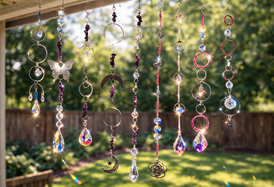
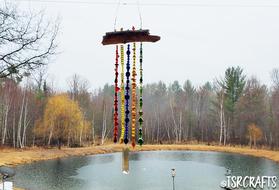
These whimsical beaded wind chime sun catchers are a beautiful and beginner-friendly way to add sparkle to your windows, porch, or garden space. In this easy step-by-step tutorial, you’ll learn how to create simple beaded sun catchers using a single wire strand method — perfect for brand new beaders or anyone looking for a quick and relaxing craft project. With crystal beads, charms, and light-catching prisms, these handmade wind chimes create gorgeous rainbow reflections when the sunlight hits them. If you’ve been searching for an easy beginner beading project that looks impressive but requires minimal tools and experience,✨ this is the perfect place to start.
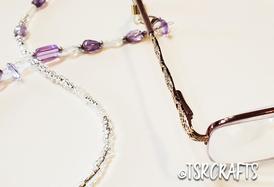
Looking for a handmade gift that’s both beautiful and practical? These DIY beaded eyeglass chains are an easy, budget-friendly project that comes together quickly but looks polished and professional. In this step-by-step tutorial, you’ll learn how to create stylish glasses chains using simple jewelry-making techniques, making them perfect for beginners or anyone wanting a fast and functional beading project. Whether you’re making one for yourself, a thoughtful handmade gift, or even small items to sell, this tutorial will walk you through the entire process from start to finish. ✨ See the full walk through here.
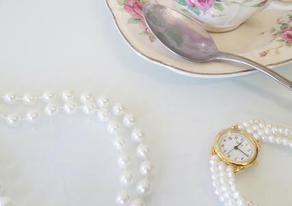
These DIY beaded watches are surprisingly simple to put together and require only a few basic jewelry-making supplies, making them a perfect project for beginner and intermediate beaders alike. In this step-by-step walkthrough, you’ll learn how to assemble a stylish, wearable watch using beautiful beads and simple connection techniques. They make thoughtful handmade gifts for birthdays, holidays, or special occasions — but you might just want to keep one for yourself, too! If you love practical jewelry projects that are both functional and beautiful, this tutorial is a fun one to try. ✨ Click here to check out the walk through!
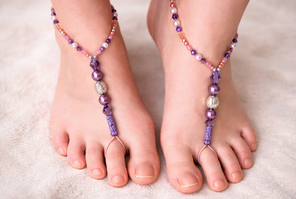
Adorn your feet with these fun and easy-to-make beaded barefoot sandals — the perfect handmade jewelry project for beach days, vacations, festivals, or summer weddings. This step-by-step tutorial shows you how to create lightweight, comfortable foot jewelry using simple beading techniques and minimal supplies. Ideal for beginner and intermediate beaders, these barefoot sandals give you the beauty of decorative jewelry without having to worry about sand in your shoes. If you love wearable beading projects that are stylish, practical, and perfect for warm weather, this is a must-try design. ✨Check out the tutorial, here
Ready to take your beading skills beyond the basics? In this step-by-step tutorial, I’ll show you how to create 9 stunning crystal beaded sun catchers using a flexible, piece-by-piece method that allows for beautiful customization. Whether you’re an ambitious beginner who’s mastered simple strand designs or an experienced beader looking for a sparkly new project, these eye-catching sun catchers are perfect for gifts, home décor, or even selling. Come see how simple techniques like eyelet loops and jump ring connections can transform basic beads into professional-looking, light-catching designs. ✨ Click here to get started.